Al-Quoz Clinic
Introduction of Hi-Fi Prototyping of the App
This dashboard is developed by Rayavaran Company
Project duration: 5 months
Members of the Doctor Panel Design Team:
1.Dr. Shirin Ayani, PhD in Medical Informatics, Project Manager
2.Fatemeh Parpanji, UI/UX Designer
3.Leila Afshari, Medical Informatics Specialist
4.Mohammad Javad Akbari, Computer Engineer (For consultation on limitations in programming design proposals)
Introduction
to our presentation on the innovative medical app developed by Rayavaran Company for Al Quoz Clinic. This clinic currently focuses on health assessments for migrants and fitness programs. But the clinic’s management aims to upgrade various departments to establish a new goal of becoming a leading center for regular health check-ups.
To achieve this, they plan to modernize facilities such as the laboratory and pharmacy and develop a comprehensive app that connects different clinic departments, ensuring patients do not need to leave the clinic for lab tests and medications. Additionally, to encourage patients to choose this clinic for their routine examinations, they are seeking to engage renowned and experienced physicians. The app will feature panels for doctors, nurses, and patients, along with online appointment scheduling and sections for laboratory, pharmacy, and imaging services. Ultimately, to meet the expectations of the clinic’s management, the following objectives were defined for the app design.
Objective of Designing This App
- The patient referral process, from selecting a physician and scheduling an appointment to the visit and treatment, should be streamlined and precise. This ensures shorter waiting times for appointments and allows patients to follow their treatment process within the clinic.
- The possibility of connecting with other departments such as the laboratory, radiology, etc., should exist so that the patient avoids going outside the clinic for these matters as much as possible.
- The workflow of physicians should be facilitated to persuade them to work at this clinic.
- The Possibility to search and review physicians, as well as schedule appointments for patients, should be available
My Role
In this project, I was responsible for conducting user experience analysis. I also designed the User Interface of Physician’s Panel and Design System. Throughout the process, I conducted interviews with target users, performed needs assessments, carried out a comprehensive competitive analysis, and identified and resolved user challenges.
Research Method
In developing this app, we employed the Design Thinking approach. During the initial phase, our design team conducted interviews with patients, identifying significant challenge: long waiting times for appointments. To address this, we decided to interview physicians to understand their needs and explore ways to reduce visit times without compromising quality.
Target Audience of Interview
Our focus includes both experienced physicians within the clinic and renowned specialists from outside the clinic, covering various specialties and disciplines.
Empathy Map
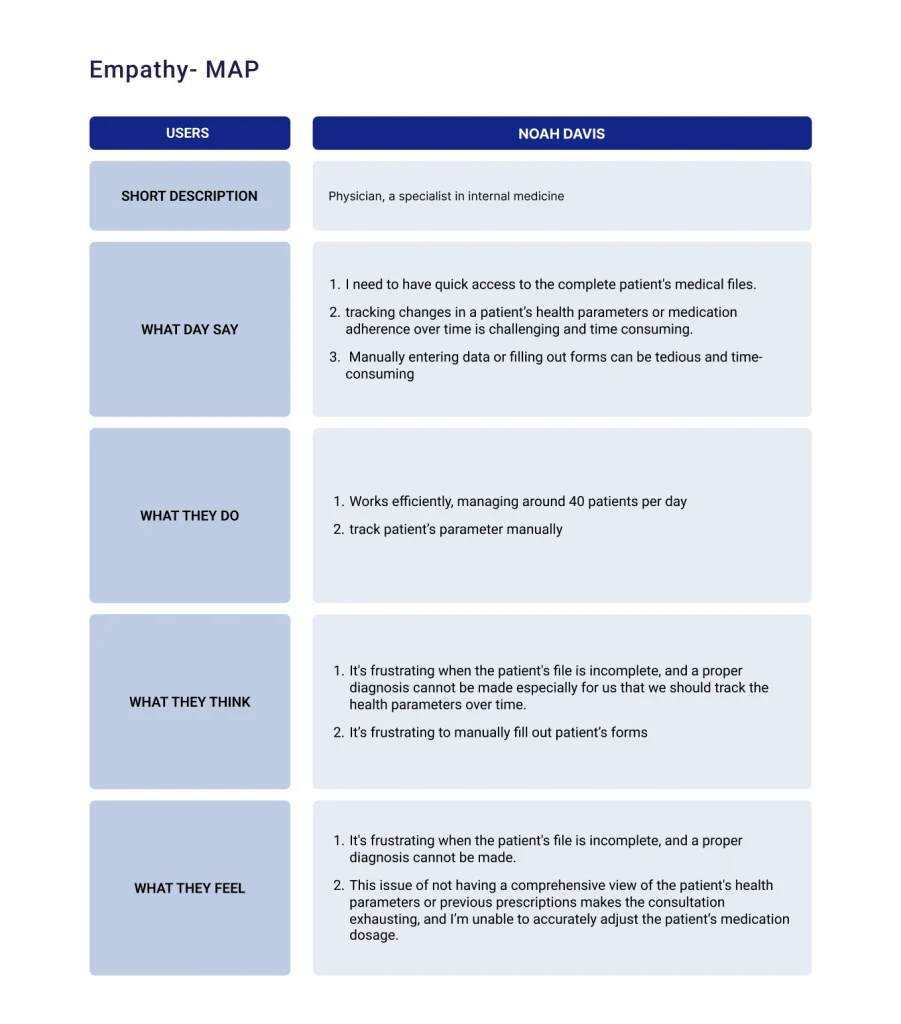
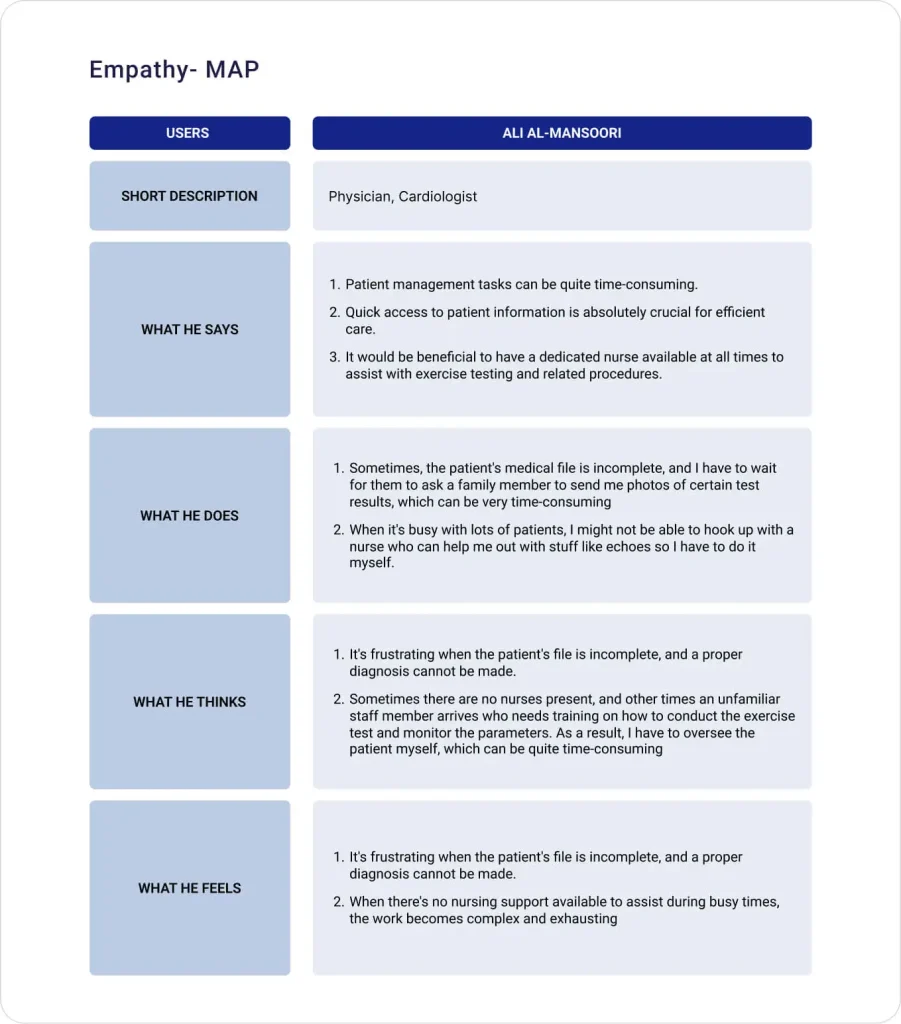
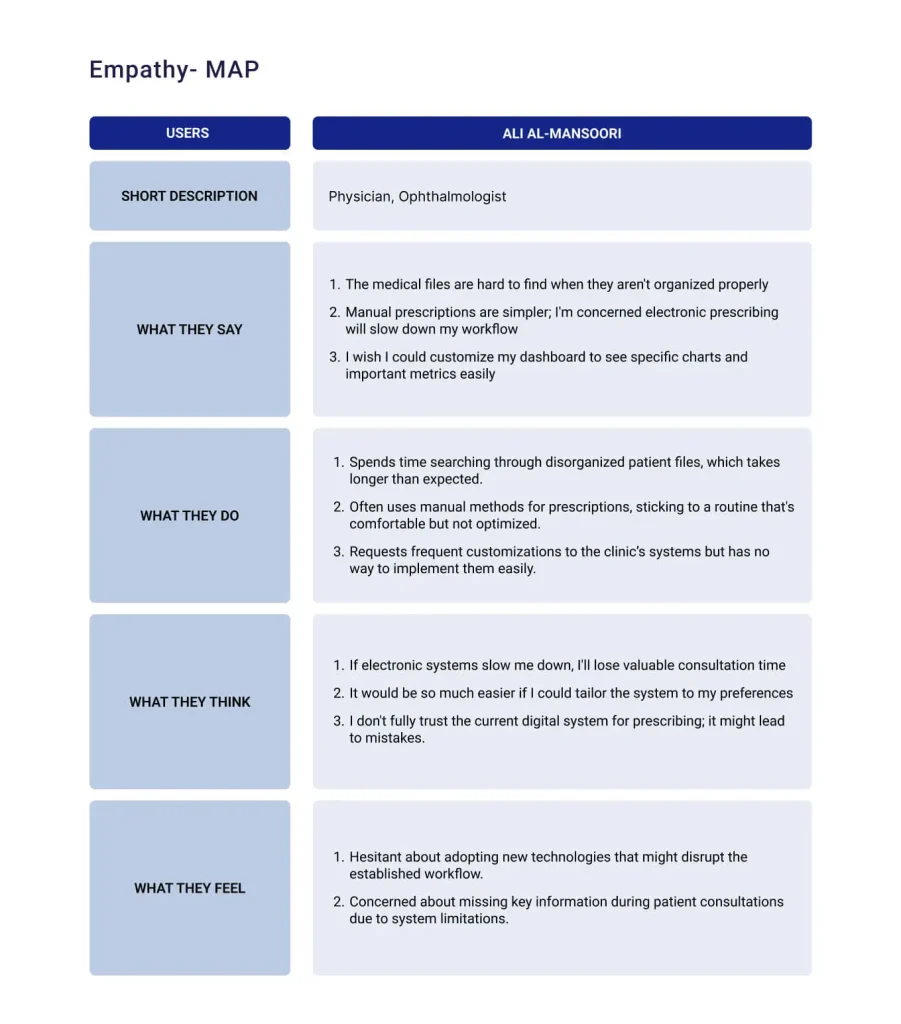
After conducting interviews with five experienced doctors at the clinic, we developed three empathy maps
Pain Points
after interview we get this pain points and then for designing the app that meet needs of user we define user persona to be able to understand our users
The medical records of patients are usually incomplete, and we often do not have full access to the patient’s treatment history , and this sometimes makes prescribing difficult.
When patients require an electrocardiogram (ECG) or echocardiogram, the appointment time becomes prolonged. There needs to be a way for patients to be managed in this situations.
1.sometimes, when treatment is prescribed that should be administered by the clinic nurse, it is either forgotten or not done properly due to poor communication, causing delays in patient care doctors want instructions given to the nurse to be recorded and prioritized to ensure that tasks are performed in order and not forgotten among the many responsibilities of the nurse.
The medical records of patients are usually incomplete, and we often do not have full access to the patient’s treatment history , and this sometimes makes prescribing difficult.
When a patient forgets to remind the doctor about drug allergies and other important factors crucial to the treatment process during each visit, it creates challenges in the treatment
recording initial patient information, such as blood pressure or A1C levels, is time-consuming for doctors, and sometimes the data is incomplete or inaccurate, leading to gaps in the patient’s medical history
much of the consultation time is spent checking health parameters, and internal medicine doctors find it challenging to review and compare medications or health metrics over time
The files need to be organized into folders for easier retrieval. Currently, when there are many files, finding the items we need takes time
This physicians are concerned that electronic prescribing might complicate and prolong the patient visit process. Many doctors in Dubai still use manual prescriptions in various centers, and they are hesitant to adopt digital systems out of fear that it will disrupt their workflow.
He wants the ability to customize their dashboard, such as adding specific charts to the main page for easier access
User Persona
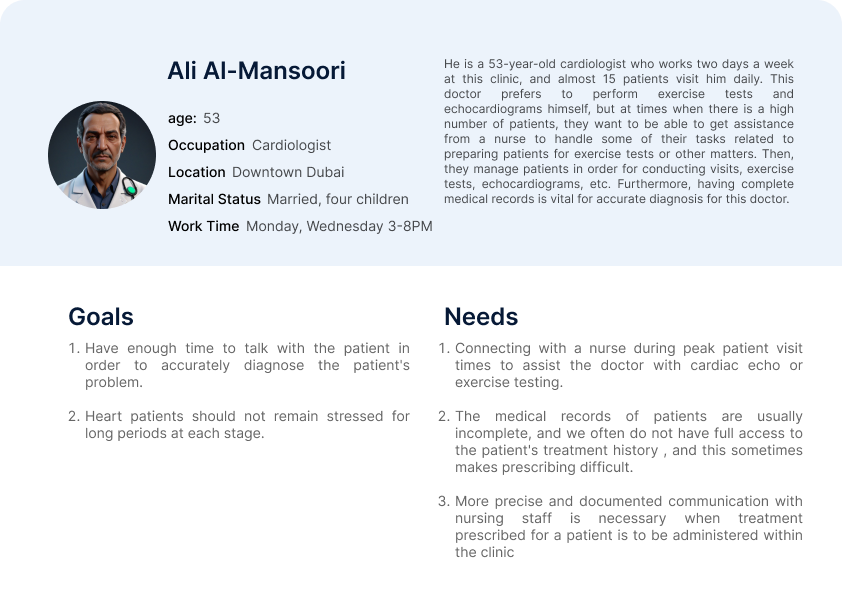
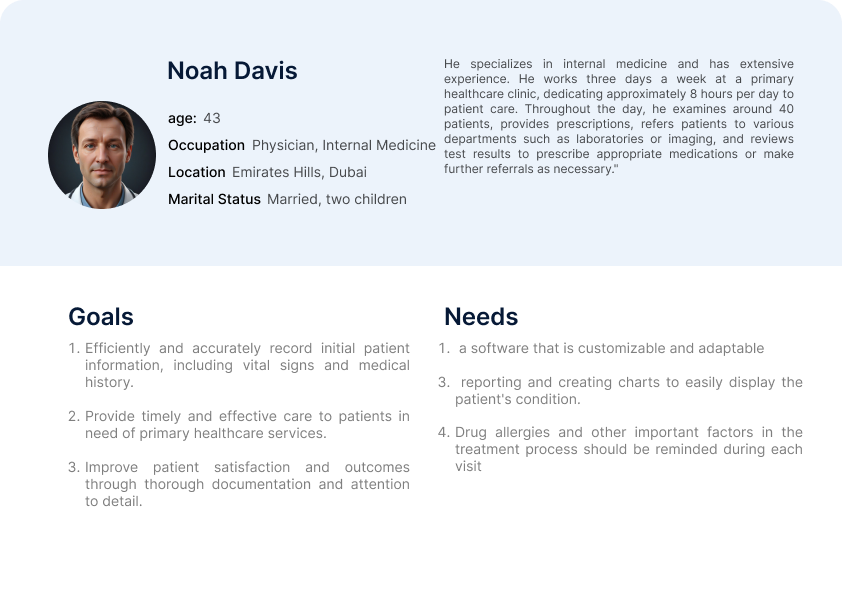
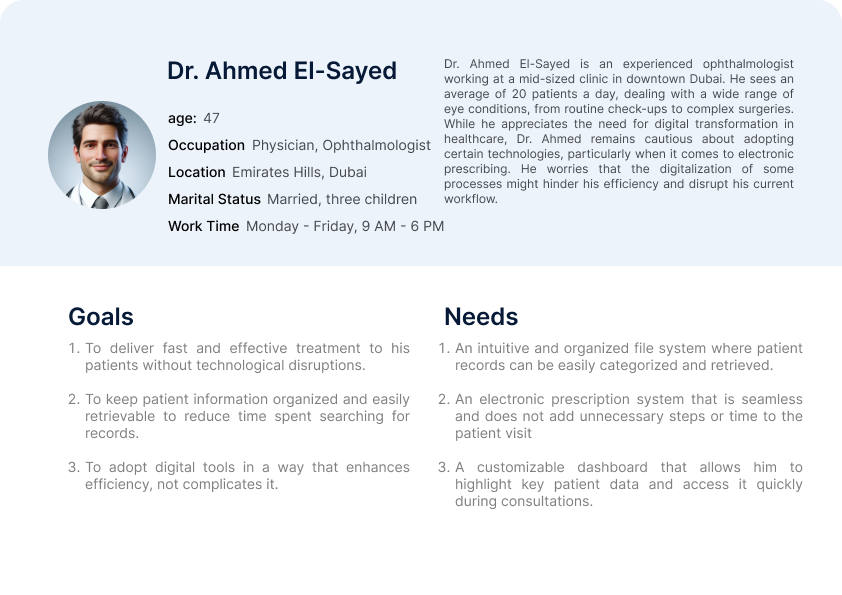
User Journey Map
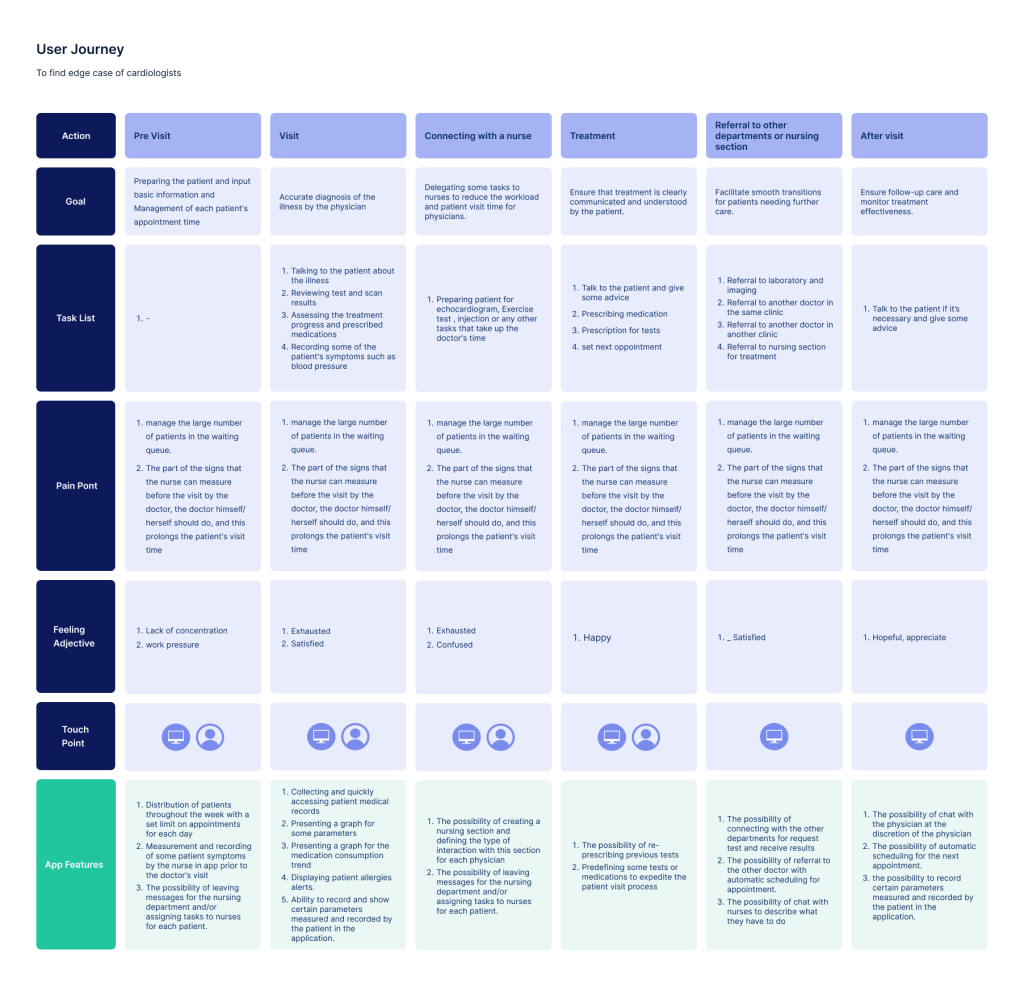
We analyze the entire user experience through a User Journey Map to identify Pain Points and challenges along the way. This tool provides us with a comprehensive understanding of user needs, problems and behavior, enabling us to enhance the user experience.
In our user journey for cardiologists for example, we’ve meticulously mapped out the critical stages of patient care to streamline the workflow. Starting from pre-visit preparations, we focus on reducing waiting times by enabling nurses to handle key measurements before the doctor’s assessment. During the visit, the app ensures accurate diagnosis through easy access to test results and previous treatments. We also optimize the nurse-doctor interaction, allowing seamless delegation of tasks like ECG or exercise tests. Treatment recommendations are simplified with prescription features, while efficient referral processes allow for quick transitions to other departments. Lastly, post-visit follow-up is enhanced with automated notifications, ensuring continued patient care and better outcomes. Each feature is designed to reduce physician workload and improve patient satisfaction.
Problem Statements
During our research, we identified several key challenges that needed to be addressed to improve the workflow and patient care experience. These challenges directly affect the efficiency of medical professionals and the quality of patient outcomes. By thoroughly understanding these issues, we gained valuable insights into how current processes can be optimized.
1.Incomplete Medical Records Problem: Physicians often face challenges due to incomplete patient medical records and limited access to full treatment histories, which complicates the process of prescribing the appropriate medications.
2.Prolonged Appointment Times Due to ECG/Echocardiogram: Physicians need a more efficient way to manage patients requiring ECGs or echocardiograms, as the process currently extends appointment times unnecessarily.
3.Unregistered Nurse Communication and Task Management: Due to poor communication, treatments that are supposed to be administered by nurses are sometimes forgotten or not performed correctly, leading to delays in patient care. Physicians need a system that records and prioritizes instructions given to nurses to ensure tasks are performed correctly and on time.
4.Patient Forgetfulness Regarding Important Health Details in Each Visit: When patients forget to inform doctors about drug allergies or significant health factors, it creates challenges in prescribing safe and effective treatments.
5.Incomplete or Inaccurate Initial Patient Data: Recording initial patient information, such as blood pressure or A1C levels, is time-consuming for doctors, and the data is often incomplete or inaccurate, leading to gaps in medical history and hindering effective treatment.
6.Concerns About System Complexity for Reporting Patient Information: Physicians are concerned that a new system might introduce additional complexity, making patient files harder to access quickly during visits, which could result in time wasted searching through multiple records.
7.Hesitation to Adopt Electronic Prescriptions: Physicians are concerned that adopting electronic prescriptions might complicate and prolong the patient visit process, especially in Dubai, where many doctors still rely on manual prescriptions and are hesitant to shift to digital systems.
8.Lack of Customizable Dashboards: Physicians want the ability to customize their dashboards, allowing them to add specific charts or data views to their main page for easier and more efficient access to relevant patient information
9.Time-Consuming Process for Reviewing and Comparing Patient Health Metrics Over Time: Internal medicine doctors spend a significant amount of consultation time reviewing health metrics, and without a clear, organized system, they face challenges in comparing medications or parameters over time.
Ideation Phase
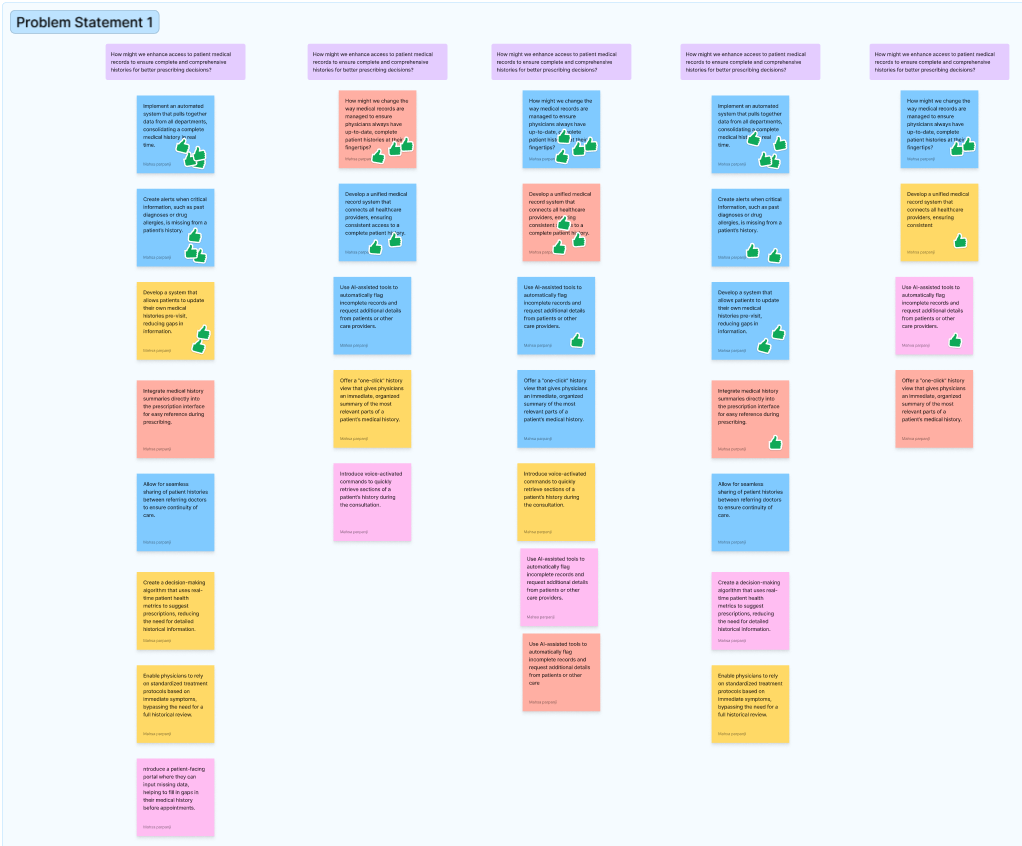
During the ideation phase, we focused on generating innovative solutions to address the key challenges identified in our research. By employing creative brainstorming techniques and creating “How Might We” questions for each Problem statement, we explored various approaches to enhance the efficiency of patient care. below you can see the process for one of the problem statment
Problem Statement 1:
Physicians often face challenges due to incomplete patient medical records and limited access to full treatment histories, which complicates the process of prescribing the appropriate medications.
How Might We Questions:
-
Amp up the good:
How might we enhance access to patient medical records to ensure complete and comprehensive histories for better prescribing decisions?- Implement an automated system that pulls together data from all departments, consolidating a complete medical history in real time.
- Create alerts when critical information, such as past diagnoses or drug allergies, is missing from a patient’s history.
- Develop a system that allows patients to update their own medical histories pre-visit, reducing gaps in information.
- Integrate medical history summaries directly into the prescription interface for easy reference during prescribing.
- Allow for seamless sharing of patient histories between referring doctors to ensure continuity of care.
-
Explore the opposite method:
How might we minimize reliance on detailed historical records and instead streamline treatment decisions with real-time data?- Create a decision-making algorithm that uses real-time patient health metrics to suggest prescriptions, reducing the need for detailed historical information.
- Enable physicians to rely on standardized treatment protocols based on immediate symptoms, bypassing the need for a full historical review.
- Incorporate AI to predict potential health risks or prescription needs based on limited patient data.
- Use health trends over time, rather than detailed histories, to suggest treatments (e.g., blood pressure trends instead of specific historical incidents).
- Develop quick-response systems for emergency or acute cases where history is less relevant, prioritizing immediate care based on current data.
-
Change the status quo:
How might we change the way medical records are managed to ensure physicians always have up-to-date, complete patient histories at their fingertips?- Develop a unified medical record system that connects all healthcare providers, ensuring consistent access to a complete patient history.
- Introduce a patient-facing portal where they can input missing data, helping to fill in gaps in their medical history before appointments.
- Use AI-assisted tools to automatically flag incomplete records and request additional details from patients or other care providers.
- Offer a “one-click” history view that gives physicians an immediate, organized summary of the most relevant parts of a patient’s medical history.
- Introduce voice-activated commands to quickly retrieve sections of a patient’s history during the consultation.
-
Break the point of view into piece
How might we break down medical records into more manageable sections, allowing physicians to quickly access the most relevant parts for better decision-making?- Organize medical records by relevance (e.g., recent medications, past treatments, allergies) to make it easier for doctors to focus on specific aspects.
- Create a timeline-based view where physicians can quickly glance at key events in a patient’s medical history, from major diagnoses to recent prescriptions.
- Divide medical histories into categories (e.g., cardiovascular, endocrine) to allow for focused review based on the current visit’s concern.
- Highlight crucial details (e.g., chronic conditions, surgeries, high-risk medications) to simplify complex medical histories.
- Develop a system where records are color-coded or tagged by importance, enabling faster retrieval of critical information.
Solutions
In the solution phase, we consolidated the most promising ideas and translated them into practical, user-centered features. Each solution was carefully designed to directly address the challenges identified earlier, ensuring that they fit within the real-world workflow of healthcare professionals. From optimizing electronic prescriptions to streamlining communication between doctors and nurses, every aspect was fine-tuned to improve efficiency, reduce errors, and enhance the patient experience. The solutions are as follows:
1.Unified Patient Records Develop a robust Electronic Health Record system that integrates all patient information in a centralized database. This system will allow physicians to access complete medical histories, including previous diagnoses, treatments, medications, allergies, and lab results, all in one place.
2.Interconnected Systems: Establish a comprehensive system that connects all departments within the clinic, including general practice, cardiology, neurology, and imaging services. This integration will allow for better communication and collaboration among healthcare providers.
3.Dashboard Overview: Create a user-friendly dashboard that provides physicians with a concise summary of each patient’s medical history upon login. This summary should include critical information such as current medications, recent lab results, allergies, and previous diagnoses.
4.Customization Options: Allow physicians to customize their dashboards according to their preferences, enabling them to quickly access the most relevant information for their practice.
5.Alerts, Notifications and Reminder: Integrate alert systems that notify physicians of any critical updates or changes in a patient’s health status, ensuring they are always aware of important information before prescribing medications.
6.Custom Graphing Tool: Provide physicians with the ability to create and visualize graphs that track specific patient parameters (e.g., blood pressure, medication dosages, cholesterol levels) over time. This feature will help doctors monitor the progression of diseases and assess the effectiveness of treatments.
7.Direct Communication with Nurses: Develop a nursing panel that allows physicians to assign specific tasks to nurses, such as administering medications or conducting specific tests for individual patients. This panel will improve communication between doctors and nurses and ensure that all tasks are well-documented.
8.save Frequently Used Lab Orders and Medications: Add a customization feature to the physician’s panel that allows them to save frequently prescribed medications or lab orders. This will eliminate the need for repetitive manual entry, enabling physicians to select from their saved options with a single click
User Flow and Wireframe
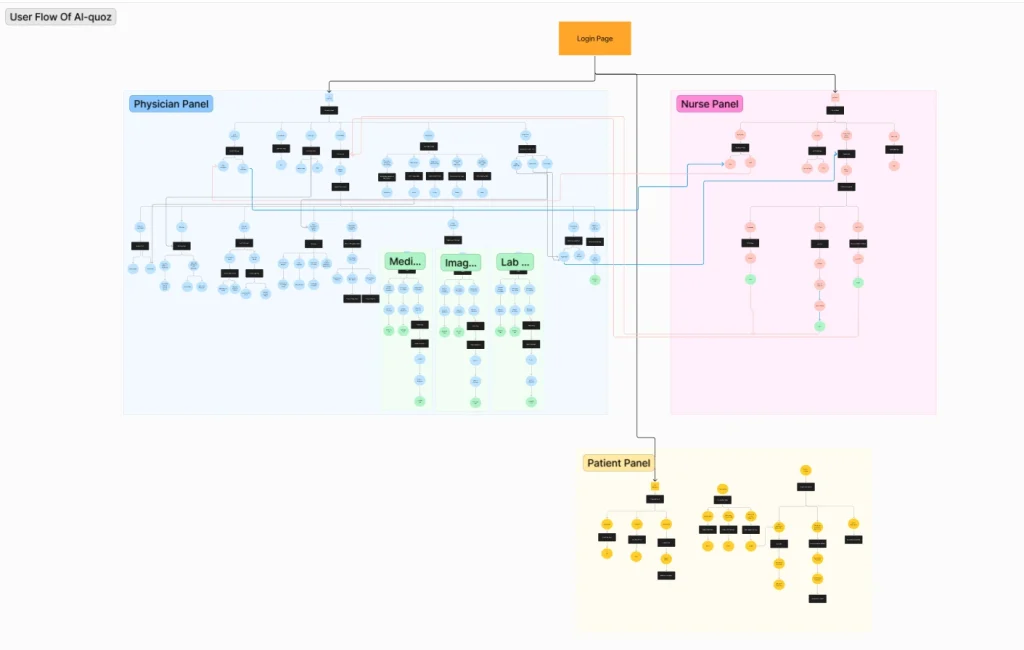
To gain a deeper understanding of all the stages and features of this application, the user flow for the doctor’s panel, as well as the nurse and patient panels, was mapped out by the design team. This was done to clearly identify the connections between the panels, determine the needs of each panel, and ensure that any necessary elements are integrated across other panels. Additionally, it provided a comprehensive view of the entire process and patient visit flow. This section was completed in collaboration with designers from other teams involved in the application.
Lo-Fi Prototype Testing
Project Background:
This project focuses on testing the lo-fi prototype of a medical app designed to improve the workflow for doctors during patient visits. The goal is to evaluate how effectively the app streamlines electronic prescriptions, patient management, and overall usability for physicians.
Research Goals:
- To understand how well doctors can navigate the app during patient visits.
- To identify pain points in using the app, particularly in the prescription and patient management sections.
- To gather feedback on the app’s user interface, workflow, and feature effectiveness.
Research Questions:
- Can doctors efficiently complete prescriptions using the app without extending the visit time?
- How intuitive is the navigation of the app for doctors during their workflow?
- Are the key features (e.g., patient summary, prescription module) easy to access and use?
- Does the app improve or complicate patient management for doctors?
Key Performance Indicators (KPIs):
- Time taken to complete a prescription.
- Number of user errors or difficulties encountered.
- Satisfaction level with the app’s user interface and ease of use.
- Frequency of accessing key features (e.g., prescription module, patient summary).
- Overall feedback on improving efficiency.
Methodology:
The test will be conducted in-person with doctors. Participants will be observed while using the app during patient visits. Afterward, they will provide feedback on their experience and suggest improvements.
Participants:
- Practicing doctors (e.g., cardiologists, general practitioners).
- Participants will be selected based on their involvement in patient care and familiarity with electronic medical systems.
Script:
1.Introduction: “Thank you for participating in this usability test. Today, we will ask you to interact with our lo-fi prototype of the medical app. This app is designed to help streamline your workflow, particularly around patient management and prescriptions. We want to observe how you use the app and gather your feedback.“
2.Task Explanation: “Please use the app as you would in a typical patient visit. You can interact with the prescription section, check patient summaries, and explore other features. As you go through your usual process, feel free to express your thoughts or any difficulties you encounter.“
3.Observation: The researcher will silently observe the participant while noting down the time taken, any confusion, and errors. Occasional prompts may be provided if necessary.
4.Post-Task Interview: “How did you find the app? Were there any points that slowed you down or seemed unclear? Do you think this would help improve your efficiency during patient visits, or would it add complexity? What would you suggest we improve?“
5.Thank You and Wrap-Up: “Thank you for your time and feedback. Your insights are crucial for us to refine and improve the app
Result of Test
During the lo-fi prototyping phase, I added a “visit complete” button in the electronic prescription section to help manage patient status, indicating that the patient’s visit has concluded and redirecting the doctor back to the patient list. Initially, I placed this button at the end of the prescription section, but doctors noted that after prescribing, they forget where the button is if they navigate to another section. They suggested placing it in a more accessible location.
I also included recent prescriptions at the beginning of the prescription process, but doctors found this feature unhelpful because most of them usually write new prescriptions, and only occasionally may repeat a previous visit. Therefore, I added a checkbox option to display recent prescriptions only if selected, making the prescription process cleaner and simpler by default.
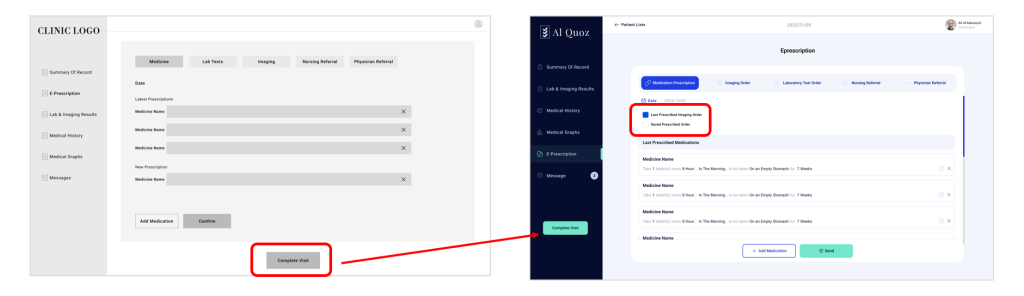
In the initial lo-fi prototype (left), the prescription process was found to be time-consuming, potentially extending the visit duration. Based on user feedback, we refined the design in the hi-fi version (right), streamlining the workflow to make it more efficient. This updated approach significantly improves the speed of prescription creation while maintaining accuracy, addressing the concerns raised during user testing
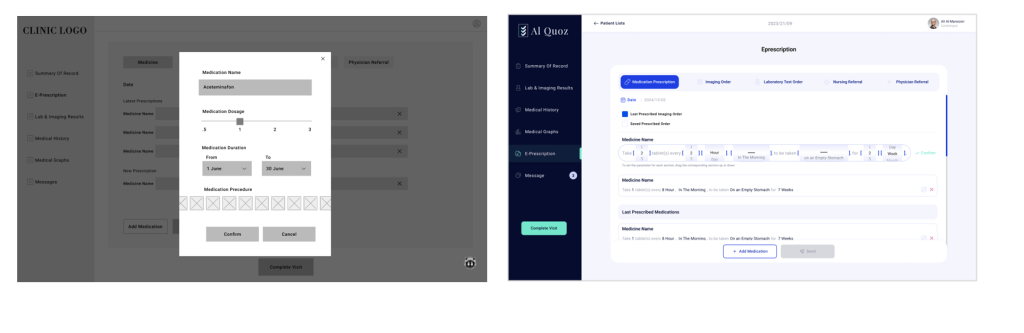
A/B Testing for E-prescription
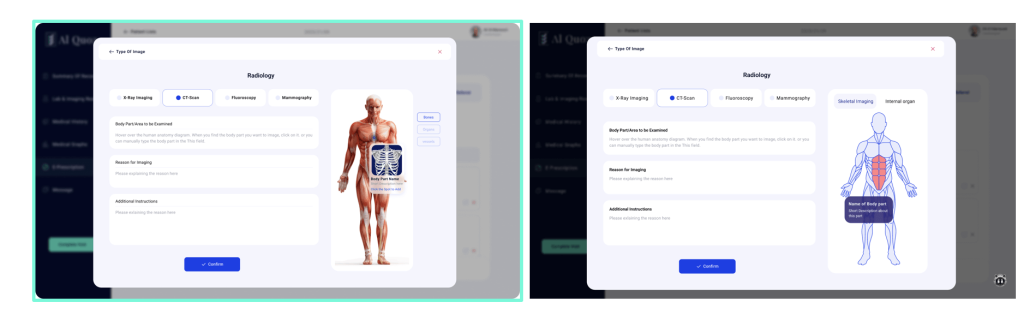
I conducted an A/B test on a specific feature of the app to evaluate two design options. After gathering feedback and analyzing user behavior, one of the options was accepted as it proved to be more intuitive and effective in enhancing the user experience.